About
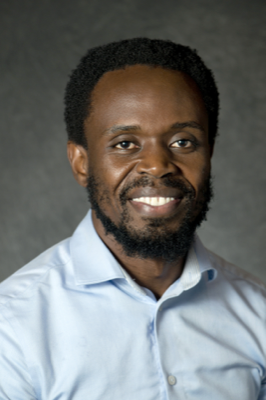
I am a development economist and Postdoctoral Fellow at the McCourt School of Public Policy, Georgetown University. I study education and human capital, labor markets, and forced displacement, with secondary interests in environmental economics. Using field and natural experiments together with large administrative and survey data, I examine how early-life environmental exposures such as lead pollution shape children’s learning, how cash transfers and skills training affect the livelihoods of refugees and low-income households and the development of their children, and how property rights and adaptation evolve under climate-driven displacement. My research has appeared in the Review of Economics and Statistics.
I am on the 2026–27 academic job market.
Job Market Paper
The Hidden Costs of Recycling: Lead Exposure and Student Learning [PDF]
I exploit the 2007 opening of 26 used-lead-acid-battery recycling plants in Kenya as a natural experiment for the effect of lead exposure on children’s learning. Using individual test scores from the national end-of-primary exam in difference-in-differences and event-study designs, I find that lead exposure reduces test scores by 0.18 standard deviations, with losses twice as large at the schools closest to the plants. The damage exceeds the gains from leading school-based learning interventions, implying that environmental protection belongs alongside pedagogy on the menu of education policy. A follow-on project, Closing the Chain (with Anirban Basu, Arijeet Mitra, and Kathrin Schilling at Columbia University), returns to the same 26 sites to attribute children’s lead burden to its sources, measure blood lead directly, and estimate an in-situ dose-response between blood lead and learning.
Publications
Andrew Brudevold-Newman, Maddalena Honorati, Gerald Ipapa, Pamela Jakiela, Owen Ozier; A Firm of One’s Own: Experimental Evidence on Credit Constraints and Occupational Choice. The Review of Economics and Statistics 2024; doi: https://doi.org/10.1162/rest_a_01529
Both a multifaceted asset-plus-training program and an unconditional cash grant move young women in Nairobi into self-employment, with effects that persist six years on; the multifaceted program yields significantly higher long-run wellbeing.
Other Research
One strand of my work asks what happens to property rights when climate change destroys the land beneath them. In Groundless Claims: Property Rights When Land Ceases to Exist, I extend the Besley (1995) framework to settings where environmental destruction permanently eliminates land, calibrated to Kenya’s Rift Valley, where rising lakes have submerged over 100 km² since 2005 and displaced more than 80,000 households. A companion empirical project, Property Rights, Climate Displacement, and Household Welfare, combines satellite-derived measures of lake expansion (2005–2025) with a planned household survey to test how tenure status shapes compensation, adaptation, and recovery.
A second strand studies displaced households directly. I am a co-investigator on Saturating the Safety Net, a randomized saturation-design RCT among roughly 4,000 refugee and host-community households in urban Nairobi (with Andrew Zeitlin, Billy Jack, and Alex Wendo), measuring the effects of cash and entrepreneurship training on livelihoods, social cohesion, and local prices. Building on that platform, Cash, Caregiving, and the Youngest Refugees adds a dedicated early-childhood-development arm assessing displaced children aged 0–8, and Livelihoods, Allocation, and Early Childhood Development in Refugee Graduation Programs (with Andrew Zeitlin and Gloria Ayesiga) evaluates graduation programs in two Uganda refugee settlements.
Background
I received my Ph.D. in Economics from the University of Delaware in 2024. Before graduate school, I spent eight years leading randomized field experiments at Innovations for Poverty Action in Kenya, managing impact-evaluation portfolios for researchers including Michael Kremer, Edward Miguel, Pamela Jakiela, and Owen Ozier. I have also consulted for the World Bank (2018–2020 and 2024–present).
Contact: gje11@georgetown.edu · Georgetown University, 125 E St NW, Washington, DC 20001 · Google Scholar
References
- Owen Ozier, Associate Professor of Economics, Williams College · oo3@williams.edu
- Adrienne Lucas, Professor of Economics, University of Delaware · alucas@udel.edu
- Andrew Zeitlin, Professor, Georgetown University · andrew.zeitlin@georgetown.edu